













AI in manufacturing: from the pilot phase to actual practice
19.06.2026
AMB, the international exhibition for metal working, is taking place once again from 15 to 19 September 2026 in Stuttgart and will have three key themes under the spotlight, namely automation, the circular economy and artificial intelligence (AI). We spoke to Guido Reimann about how much progress the industry has actually made and what decision-makers can expect to take away from AMB 2026. Reimann is Deputy CEO of VDMA Software and Digitalisation, as well as Co-ordinator of the VDMA Artificial Intelligence Competence Network.
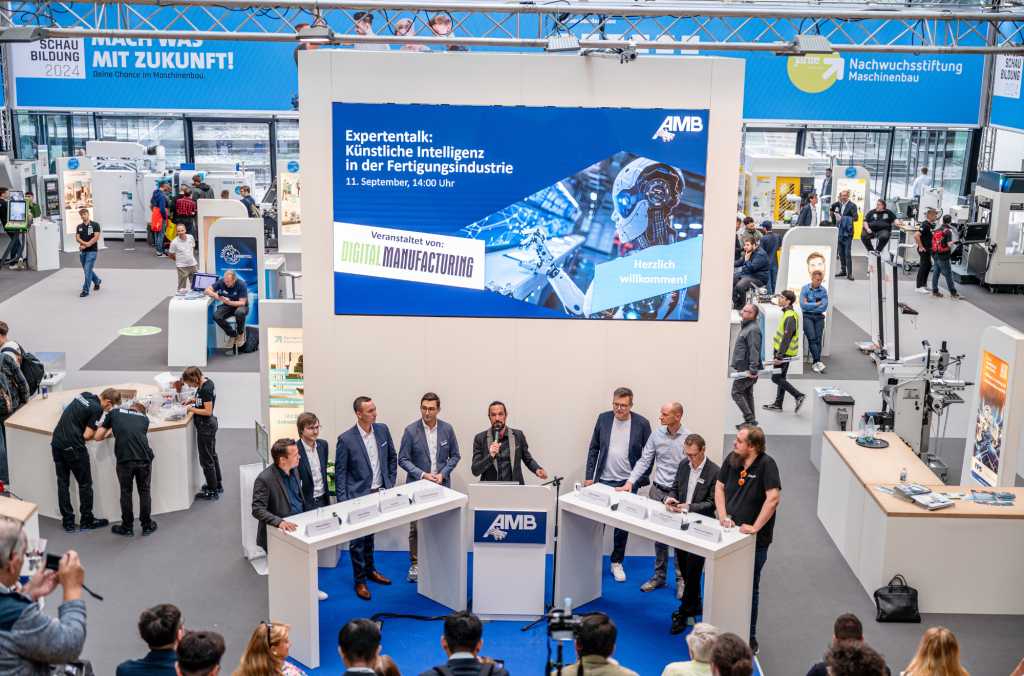 Photo: Messe Stuttgart
AMB: AI was also extensively covered at the AMB 2024 event. Where does the metal cutting industry stand now in 2026? Has AI infiltrated industrial practice or are pilot projects still dominating?
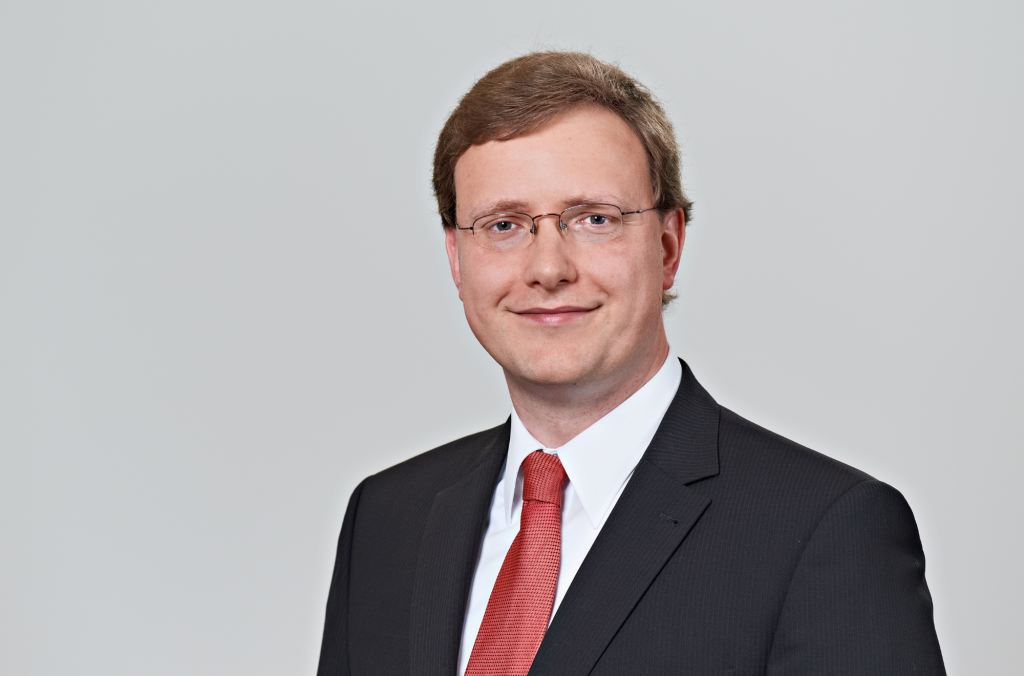 Guido Reimann: For the mechanical engineering sector in general, as well as those involved in precision and machine tool manufacture, talk continues to revolve around the topic of artificial intelligence. A VDMA survey from early 2026 has shown that more than 80 percent of mechanical engineering companies consider AI technologies to now have greater significance. Around one third of these companies are already using AI in live environments. In other words, we have moved on from the initial experimental phase. AI is increasingly permeating our everyday applications and there are still plenty of pilot projects being undertaken in efforts to become better acquainted with the technology and experiment with new applications.
The focus of current industrial production lies in software development, development and design, corporate governance, IT, marketing and communication. We are also seeing an increase in the use of AI solutions in Sales and with product-related services for the customer sectors of mechanical engineering. In order to be able to exploit further potential, companies need to keep tabs on their own digitalisation efforts and strategically plan for its success.
AMB: The mechanical engineering sector is hoping for measurable efficiency gains from the use of AI. Do you have any precise figures from the metal cutting industry – and what are still the biggest obstacles faced during implementation?
Guido Reimann: AI solutions and approaches not only promise efficiency gains but greater efficiency along the entire value chain. Such as reducing costs when creating technical documentation and operating manuals, saving time and money in procurement by increasing the number of identical parts and thus improving purchasing conditions, or reducing unscheduled downtimes, for example at machine tools – where cost reductions of 10 to 20 percent are possible. AI solutions can also help to considerably accelerate processes in areas such as development, production, or sales and customer service.
The widespread implementation of sustainable digitalisation is a prerequisite for the use of AI and other digital technologies. However, obstacles often present themselves, in the form of change management, slow implementation or lack of personnel resources. Often, failure has less to do with the technology and more to do with the organisation, decision-making structures, lack of integration, knowledge about applications and limits, as well as other non-technical factors. And when it comes to AI, not every pilot project will succeed. It is important to be able to recognise this early on and divert precious resources into more effective digitalisation activities.
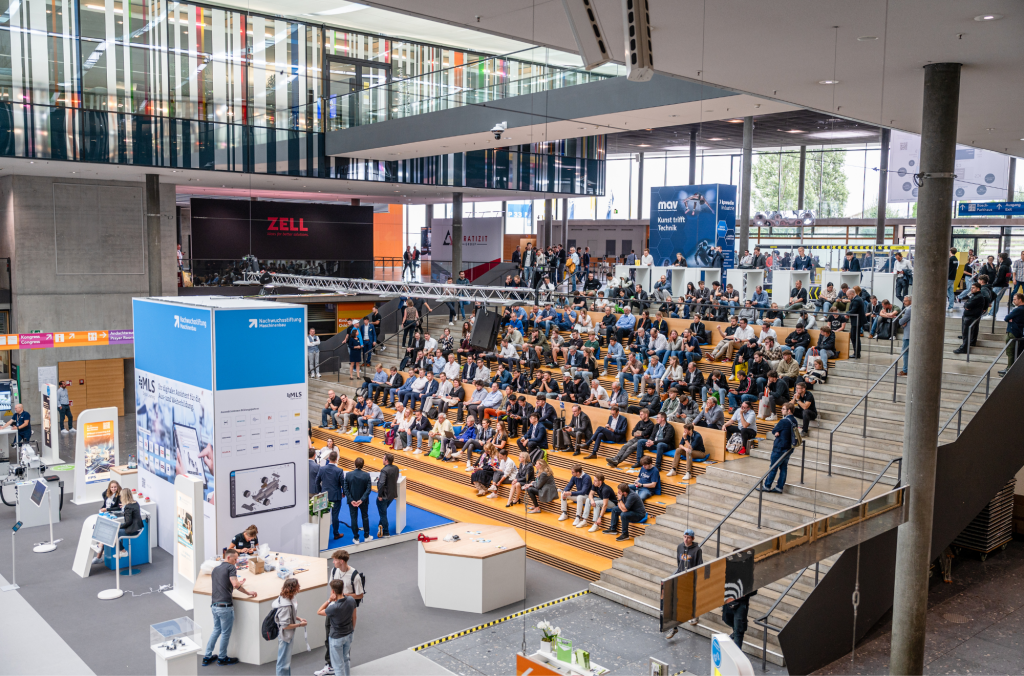 Photo: Messe Stuttgart
AMB: What are the AI technologies and application fields to watch out for when attending AMB 2026 – and what makes a visit to AMB 2026 so important for professionals from the metal cutting industry?
Guido Reimann: When it comes to the classic product development and design sectors, as well as software development, we are now seeing plenty of AI solutions from the software industry. At the same time, there are many mechanical engineering companies who have integrated AI technologies into their products or product-related services and are promoting these for metal cutting applications. At AMB, trade visitors will not only find machinery manufacturers and suppliers for production services, but also software and service companies who can provide support along the entire value chain.
AMB: Industrial AI, EU AI Act, humanoid robotics, quantum computing – there’s certainly a lot going on. What developments should those in the metal cutting industry keep a close eye on over the next five years?
Guido Reimann: You’re right, there is certainly an expansion of the relevant digital technologies, application scenarios and regulatory requirements. And this is something the suppliers and application industries need to embrace. Digital technologies are not only becoming increasingly relevant for internal company processes, but they are also having a considerably greater influence on the company’s business models. Early recognition and acceptance of these new digital technologies, the opportunities they bring for the company and the customer industries will lay the groundwork for future success. We also know from the VDMA survey that mechanical engineering companies are currently prioritising the use and expansion of three specific technologies: artificial intelligence, digital twins and open-source software.
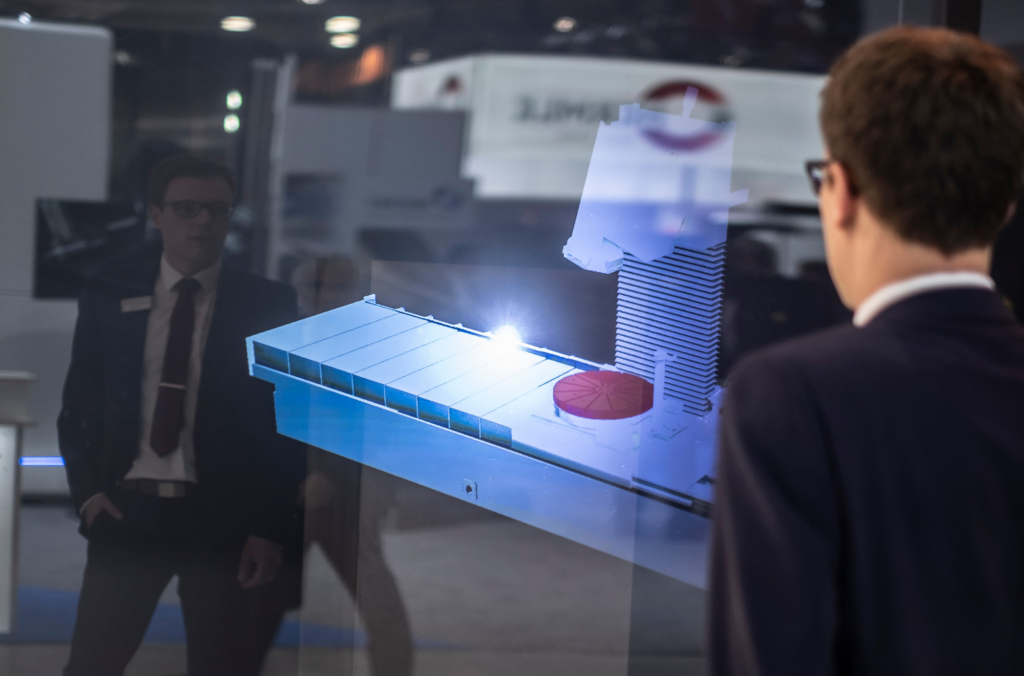 Photo: Messe Stuttgart
AMB: Thank you for talking to us, Mr. Reimann.
Greater visibility for artificial intelligence
The topic of artificial intelligence will not only be explored at the trade fair stands but also in direct personal exchange when experts take to the AMB Stage on Wednesday, 16 September. There are two special events planned: the VDMA Software and Digitalisation event invites visitors to participate in the podium discussion “Artificial Intelligence in Manufacturing – Practical Examples” from 12:00 to 13:30. This will be followed by an expert talk on “AI in Production – From Hype to Added Value” at 14:00, involving industry and research representatives who will discuss the latest developments, specific applications and open questions relating to the use of AI in the metal cutting industry. The AMB Stage is located in the Atrium (EO010) at the Entrance East.
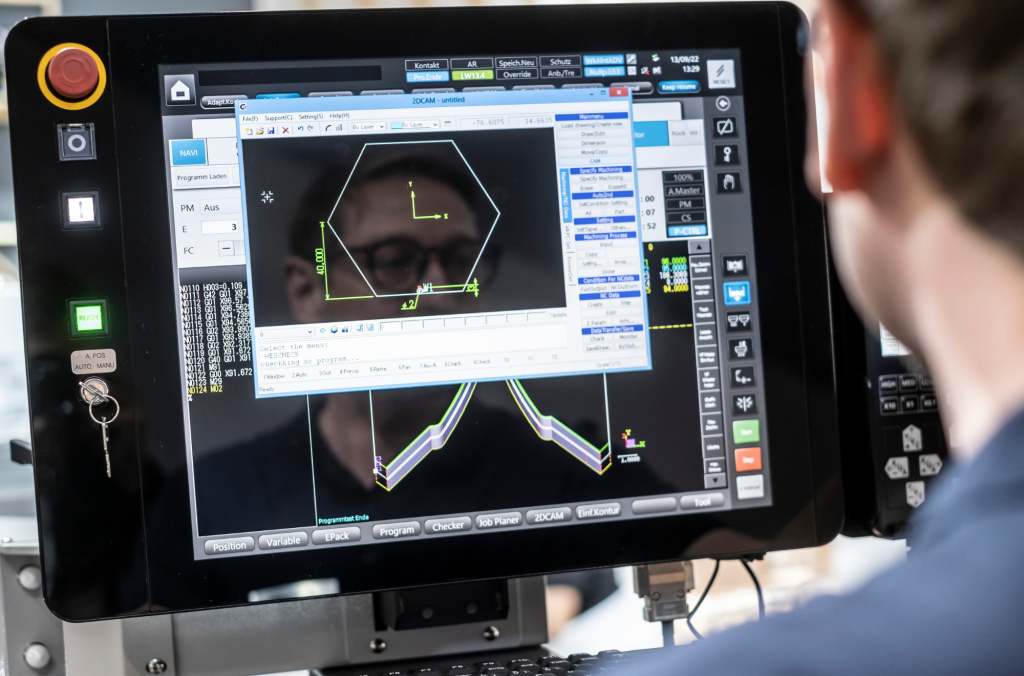 Photo: Messe Stuttgart
Source: www.amb-messe.de